
RERA Registration Fees in Haryana 2026: Project Fees, Processing and Late Fees

Last updated: 14 October 2026
RERA registration fees in Haryana for a real estate project are charged per square metre. Under Schedule I of the Haryana RERA Rules, residential and industrial projects pay Rs 10 per sq m in hyper and high potential zones and Rs 5 in medium and low potential zones. Commercial and cyber park projects pay Rs 20 or Rs 10, and plotted colonies pay Rs 10 everywhere. In Gurugram district, HRERA also charges a processing fee of Rs 10 per sq m, plus late fees if you apply late.
This guide puts every project fee in one place: registration, processing, late registration, extension and continuation. It uses the Haryana RERA Rules, 2017 and HRERA Gurugram’s standard fee regulations, republished in the Haryana Government Gazette on 20 August 2026.
Schedule I: the registration fee
The promoter pays the registration fee with the application under Rule 3(2), by demand draft or online.
| Category of use | Hyper and High I and II zones | Medium and Low zones |
|---|---|---|
| Residential or industrial | Rs 10 per sq m | Rs 5 per sq m |
| Commercial or cyber park | Rs 20 per sq m | Rs 10 per sq m |
| Plotted colony | Rs 10 per sq m | Rs 10 per sq m |
Three notes come with the schedule:
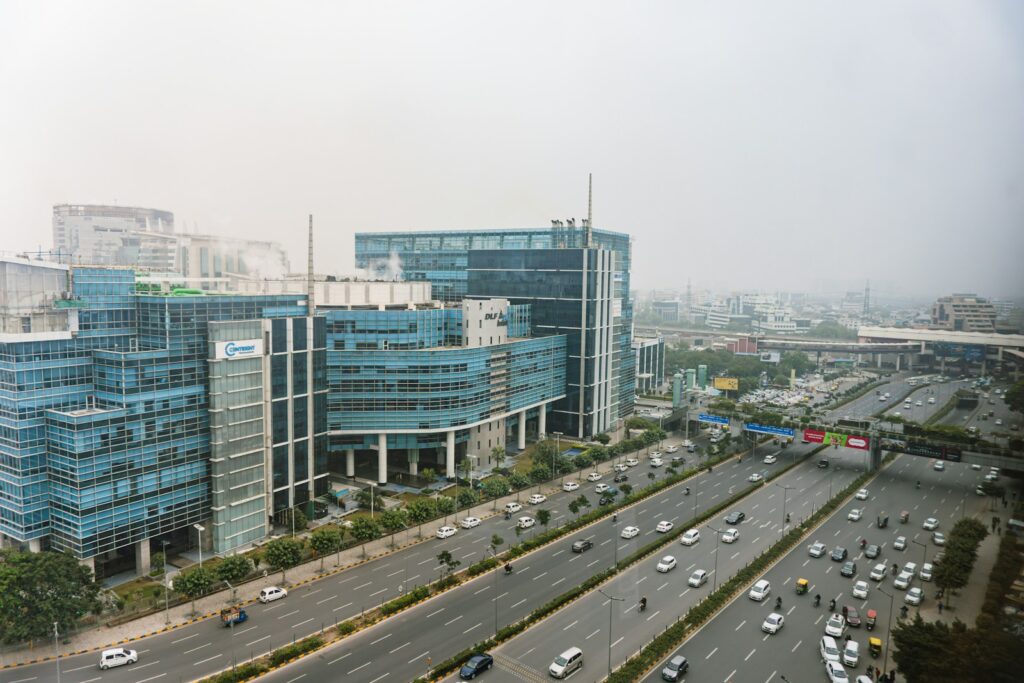
- The zones are the ones used for licence fees under the Haryana Development and Regulation of Urban Areas rules (notification of 2 February 2015). Gurugram is the hyper potential zone. Faridabad, Sohna and Gwal Pahari are High-I; Sonipat-Kundli and Panipat are High-II; most other district towns are medium or low.
- For residential or industrial plotted colonies, the rate applies to the gross area of the colony.
- For group housing, commercial and cyber parks, the rates are for up to 100 FAR and go up proportionately for higher FAR. Ask your architect or CA to work the figure from your sanctioned FAR before you prepare the draft.
Processing fee in Gurugram
HRERA Gurugram adds a standard processing fee for scrutiny of the application:
| Project type | Processing fee |
|---|---|
| Residential, commercial or industrial | Rs 10 per sq m of total floor area as per FAR |
| Plotted colony | Rs 10 per sq m of the total area of the colony |
The same processing fee applies to an application to amend a registration. HRERA Panchkula, which covers the rest of Haryana, sets its own standard fees, so check its regulations page if your project is outside Gurugram district.
A worked example: a 10-acre plotted colony in Gurugram
Ten acres is about 40,469 sq m.
- Registration fee at Rs 10 per sq m of gross area: about Rs 4.05 lakh.
- Processing fee at Rs 10 per sq m of total area: about Rs 4.05 lakh.
- Total at the time of application: about Rs 8.1 lakh, before any late fee.
For a group housing project the arithmetic depends on the FAR, so work it out with your consultant. The point of the example is scale: RERA fees are small next to EDC, IDC and licence fees, but the late fees below can double them quickly.
Late fees for registering an ongoing project late
For ongoing projects that applied after 28 October 2018, HRERA Gurugram charges a standard fee for delay on top of the registration fee: 50% of the registration fee for the first six months, rising by another 50% of the registration fee for every further six months or part of it. A project two years late would pay the registration fee plus four times 50%, which is three times the original fee in total.
For new projects, the rule is simpler. Section 3 of the RERA Act bars a promoter from advertising, marketing, booking or selling any unit in a project that needs registration until it is registered. That includes ads on Facebook, Instagram and portals. See our guide to RERA advertising rules before you plan any pre-launch campaign.
Extension and continuation fees
Projects that run late pay again:
| Application | Fee under the Rules or regulations | Delay fee in Gurugram |
|---|---|---|
| Extension under Section 6 (Form REP-V) | Half the registration fee, plus Rs 10 per sq m processing | 50% of the extension fee for the first month late, plus 50% for every further month |
| Continuation under Section 7(3), per year | Half the registration fee for each year, plus Rs 10 per sq m processing | 50% of the one-year continuation fee for the first month late, plus 50% for every further month |
Apply for extension three months before the registration expires (Rule 6(1)). Where the extension is due to force majeure, court orders or government policy, the Authority may waive the extension fee. Continuation applications are also due three months before the extension period ends.
Other charges in Gurugram
- Change of bank account: Rs 5,000.
- Amendment of the registration certificate only: Rs 5,000.
- Withdrawing a project application within 30 days: Rs 50,000 or the processing fee, whichever is higher, is deducted from what you paid.
Documents that go with the application
Rule 3 of the Haryana RERA Rules lists what a promoter files. The main items are:
- Authenticated PAN card of the promoter.
- Annual reports, or audited profit and loss, balance sheet, cash flow and auditor’s reports, for the last three financial years.
- Number of open and covered parking spaces.
- Title deed with the chain of title.
- Details of encumbrances, with a non-encumbrance certificate from a revenue officer not below the rank of Tehsildar.
- Where the promoter is not the landowner, the owner’s consent and the collaboration or development agreement.
- Name, photograph and contact details of the promoter, or of the chairman, partners, directors and authorised person.
Once registered, the work does not stop. Haryana promoters must upload quarterly progress reports within 15 days of every quarter. Punjab has the same 15-day rule, which we cover in our Punjab RERA QPR guide.
Registration done, launch next? Message us on WhatsApp. We plan and run RERA-compliant Google and Meta campaigns for builders in Haryana and Punjab, with the registration number on every ad.
Haryana vs Punjab project fees
Punjab charges per square metre too, but with different rates by area. Our guide to Punjab RERA project registration has the Punjab table. If you are planning projects on both sides, budget each state separately. The two schedules do not line up.
Fees are one line in a launch budget. The bigger costs are marketing and sales. Our guide to the real estate marketing budget in India shows how builders usually split it.
FAQ: RERA registration fees in Haryana
What are the RERA registration fees in Haryana for a residential project?
Rs 10 per sq m in hyper and high potential zones and Rs 5 per sq m in medium and low zones, under Schedule I of the Haryana RERA Rules. Rates are for up to 100 FAR and rise proportionately for higher FAR.
What is the processing fee for RERA registration in Gurugram?
HRERA Gurugram charges Rs 10 per sq m of total floor area as per FAR for residential, commercial and industrial projects, and Rs 10 per sq m of total area for plotted colonies.
What is the late fee for RERA registration in Haryana?
For ongoing projects registered late in Gurugram, the delay fee is 50% of the registration fee for the first six months, plus another 50% for every further six months or part of it.
How much does a RERA extension cost in Haryana?
Half the registration fee under Rule 6(2), plus the Gurugram processing fee of Rs 10 per sq m. Applying late adds 50% of the extension fee for each month of delay.
Can a builder advertise before RERA registration in Haryana?
No. Section 3 of the RERA Act bars advertising, marketing, booking or selling units in a project that needs registration until it is registered.
The short version
RERA registration fees in Haryana run from Rs 5 to Rs 20 per sq m depending on zone and use, plus a Rs 10 per sq m processing fee in Gurugram. A 10-acre plotted colony in Gurugram pays about Rs 8.1 lakh at application. Apply on time, because late, extension and continuation fees stack up fast, and do not run a single ad until the registration number is in hand.
Sources: Haryana RERA Rules, 2017, Rules 3 and 6 and Schedule I; HRERA Gurugram standard fee regulations, Haryana Government Gazette, 20 August 2026. Checked on 14 October 2026. This is general information, not legal or tax advice.