
RERA Advertising Rules: What Punjab Builders Keep Getting Wrong

Most builders in Punjab treat RERA as a registration formality — something the legal team handles once, then forgets. Then the marketing starts, and nobody checks whether the ads themselves are compliant.
That gap is where the risk sits. The RERA advertising rules are not a footnote to the Act. They are among its most aggressively enforced provisions, and the penalties are calculated as a percentage of your project cost, not as a flat fine.
We work with builders, dealers and brokers on paid campaigns, so we read this section of the Act carefully — because if we build a campaign that puts a client in breach, that is our failure, not theirs. Here is what the law actually says about the RERA advertising rules, and the four places we most often see them broken.
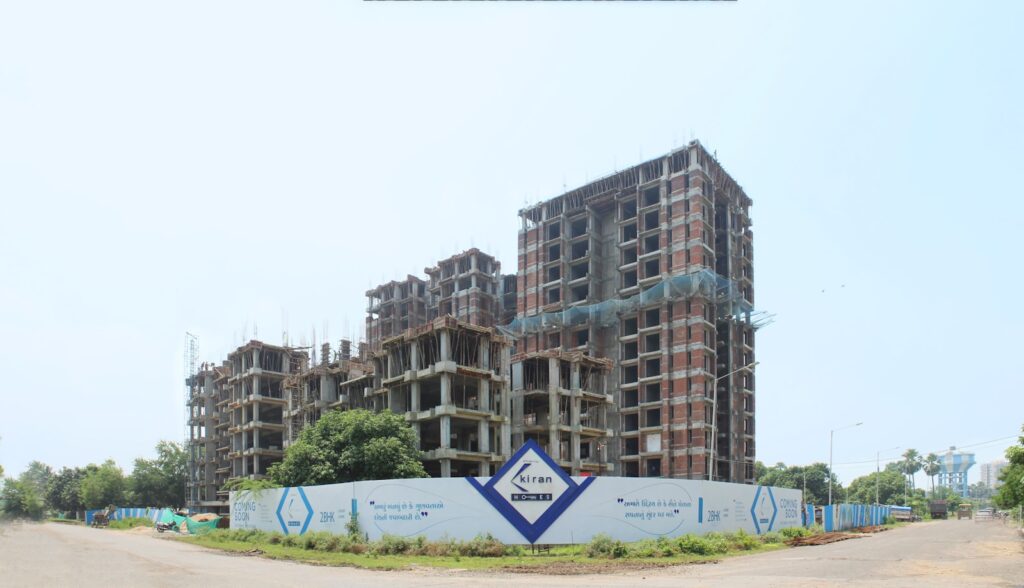
What RERA counts as an advertisement
Start here, because most misunderstandings trace back to a narrow reading of this word.
Section 2(a) of the Real Estate (Regulation and Development) Act, 2016 defines an advertisement as any document described or issued as an advertisement through any medium — including any notice, circular, or other document or publicity in any form — that informs people about a real estate project, offers a plot or apartment for sale, or invites people to purchase.
Read that again with your marketing in mind. In practice it covers:
- Meta and Google ad creatives
- Instagram and Facebook posts on the project page
- WhatsApp broadcasts and forwards
- SMS campaigns
- Landing pages and project microsites
- Hoardings, brochures, leaflets
- YouTube walkthroughs and property tour videos
A boosted Instagram post announcing a launch is an advertisement under this definition. So is a WhatsApp forward a channel partner sends to a buyer list. There is no informal tier. Festive creatives are covered too, and our guide to Diwali real estate ads shows where the RERA number and website belong on an offer ad.
Rule 1: No advertising before registration
Section 3(1) is the provision most often breached, and it is worded to leave very little room:
No promoter shall advertise, market, book, sell or offer for sale, or invite persons to purchase in any manner any plot, apartment or building, as the case may be, in any real estate project or part of it, in any planning area, without registering the real estate project with the Real Estate Regulatory Authority established under this Act.
Note the sequence — advertise comes first, before market, book or sell. The prohibition attaches at the point of promotion, not at the point of transaction. And “invite persons to purchase in any manner” closes the obvious workaround.
Pre-launch teasers are the trap. Name the project, show a render, collect a number — that is an invitation to purchase under Section 3(1). You have not taken a rupee. It does not matter.
Building demand before that date is not off-limits — only inviting a purchase is. Our real estate pre launch marketing guide covers what stays on the right side of that line.
Hindustan Times has reported on Punjab builders advertising projects in breach of Section 3, so this is not a theoretical concern in this market.
Exemptions under Section 3(2). Registration is not required where the land does not exceed 500 square metres, or where the number of apartments does not exceed eight, inclusive of all phases. Also exempt: projects that received a completion certificate before the Act commenced, and renovation or repair work that does not involve marketing, advertising, selling or new allotment.
Rule 2: Every phase is a separate project
This one catches experienced builders, and it is stated plainly in the Explanation to Section 3: where a project is developed in phases, every phase is a standalone real estate project, and the promoter must register each phase separately.
So a registration for Phase 1 does not cover Phase 2. If you are running ads for Phase 2 on the strength of your Phase 1 registration number, you are advertising an unregistered project — and displaying a registration number that does not correspond to what you are selling.
The larger developers already work this way. On the RERA Punjab portal, Omaxe New Chandigarh holds separate registrations for Integrated Residential Township Phase 6, 6A, 6B and 6C — four distinct numbers for what buyers experience as one township. That is the standard.
We see the opposite constantly in campaign audits. The creative gets duplicated from the previous phase, the registration number carries over with it, and nobody catches it because the number looks right.
Rule 3: The registration number must appear prominently
Section 11(2) requires that the advertisement or prospectus shall mention prominently the website address of the Authority — where the registered project’s details are entered — and include the registration number obtained from the Authority. Section 11(1) also requires promoters to keep that project page updated every quarter, and Punjab now charges a daily late fee for missed filings. See our guide to the Punjab RERA QPR and its late fees.
Two obligations, and most ads satisfy only one.
The word carrying the weight is prominently. Six-point grey text in the corner of a creative does not satisfy it, and enforcement here is systematic rather than occasional. In an action reported in July 2024, MahaRERA moved suo motu against 628 housing projects for failing to display the registration number and QR code in their advertising, levying Rs 88.90 lakh in penalties across the Mumbai, Pune and Nagpur regions.
MahaRERA is the Maharashtra authority, not Punjab, so those particular orders do not bind a Mohali or Zirakpur builder. It matters anyway, for two reasons. The regulator identified those violators with help from the Advertising Standards Council of India using artificial intelligence, scanning newspapers, websites, streaming channels and social media — and it found the violation rate was significantly higher on social media than in traditional advertising formats. If your campaigns run on Meta or Google, you are advertising precisely where detection has become sharpest. MahaRERA has also noted that other state authorities adopted the QR code requirement after Maharashtra introduced it, which tells you the direction this is travelling.
Practical test: if a buyer scrolling at normal speed on a phone cannot find the registration number without stopping to hunt, it is not prominent.
Rule 4: Your channel partners are your exposure
Sections 9 and 10 require real estate agents to register with the Authority before they facilitate a sale, and before they advertise or market. Under Section 62, an agent who contravenes this faces a penalty of Rs 10,000 for every day the default continues, cumulatively extending up to 5% of the cost of the units for which the sale was facilitated.
That registration requirement is only the compliance floor. Our real estate marketing for brokers guide covers what building a compliant, effective broker practice looks like once you are registered.
If unregistered channel partners are running their own Meta ads for your project, with their own creatives and their own numbers, that activity is happening in your project’s name. Vet what your channel partners distribute before it goes live. Most builders never ask to see it.
What non-compliance actually costs
| Provision breached | Penalty |
|---|---|
| Section 3 — advertising without registration (Sec 59(1)) | Up to 10% of estimated project cost |
| Continued violation of Section 3 (Sec 59(2)) | Up to 3 years imprisonment, or a further fine up to 10% of project cost, or both |
| False information / breach of Section 4 (Sec 60) | Up to 5% of estimated project cost |
| Any other contravention (Sec 61) | Up to 5% of estimated project cost |
| Agent breaching Sec 9 or 10 (Sec 62) | Rs 10,000 per day, up to 5% of the cost of units sold |
There is a second exposure that is easy to miss. Under Section 12, where a buyer makes an advance or deposit on the basis of information in an advertisement and suffers loss because of an incorrect or false statement in it, the promoter must compensate them. If the buyer withdraws, the entire investment must be returned with interest, plus compensation.
An overstated amenity in a Facebook ad can become grounds for a refund claim on a booking. Section 7 also lists the publication of advertisements for services not intended to be offered as a ground for revocation of registration. Check your ads against RERA advertising rules and against what is live in the Facebook Ad Library before you spend.
Marketing copy becomes contractual. Write your ads as though a regulator will read them next to your sanctioned plan. That is the test.
A RERA advertising rules checklist for your next campaign
- The specific phase being advertised is registered — not just the parent project
- The registration number on the creative matches that phase
- The number is prominently placed and legible on mobile
- The RERA Authority website address appears in the ad or landing page
- Every amenity, dimension and timeline claimed matches the sanctioned plan
- Images are actual, or clearly labelled as artist’s impressions
- Testimonials are genuine
- Channel partners running their own ads are registered, and their creatives are vetted by you
Punjab’s RERA has issued a public notice on advertising, and the state rules cover ongoing projects as provided in the central Act. If you are unsure where a specific project stands, confirm the position with your legal advisor against the Punjab RERA portal — this article explains the framework, but it is not legal advice.
Why we care about this
Most agencies will run whatever creative a builder approves and treat compliance as the client’s problem. That is a bad way to work. A campaign that generates 200 leads and a Section 59 notice is not a successful campaign.
When we build paid campaigns for builders, dealers and brokers, a review against the RERA advertising rules happens before launch, not after a complaint. It costs nothing extra and removes an entire category of risk.
If you are weighing up who should handle this, the questions worth asking are the ones we walk through in our guide to judging a real estate marketing agency in sixty minutes. For the wider picture on where campaigns fit, see our 2026 playbook for real estate lead generation in India.
Running ads for a project right now? Send us the creative and we will tell you — free, no pitch — whether it holds up against Sections 3, 11 and 12.
Thank you for reading 🙏
A quick note on who wrote this guide: Leadproio is a digital marketing agency for real estate businesses in Punjab. We’re not a property dealer or legal consultant, so we’re not able to advise on individual properties or paperwork.
What we do for builders, colonisers, dealers and brokers:
- Google ads and Facebook and Instagram ads that bring enquiries straight to your WhatsApp
- Google ranking for your website and projects
- Google Business Profile setup and management
- Websites and landing pages built to get enquiries
If you run a real estate business and would like more enquiries, we’d be glad to hear from you.