
Real Estate Pre Launch Marketing: What RERA Actually Allows

Soft launch. Pre launch offer. Early bird booking. Expression of interest. The vocabulary changes every year, and underneath it sits the same practice: taking money or commitments for a project before it is registered. Real estate pre launch marketing is where otherwise careful Punjab builders take on legal risk they have not priced.
The confusion is understandable, because the industry has normalised it. The law is considerably less ambiguous than the industry practice suggests.
This is not legal advice, and a project specific question belongs with your lawyer. What follows is what the statute plainly says, and how to build genuine demand before launch without stepping over it.

What Section 3 actually prohibits
Section 3 of the Real Estate (Regulation and Development) Act, 2016 bars a promoter from advertising, marketing, booking, selling or offering for sale, or inviting persons to purchase in any manner, any plot, apartment or building in a real estate project without first registering it with the Authority.
Read that list of verbs again, because the breadth of it is the entire point. It does not only prohibit selling. It prohibits advertising and marketing, and it prohibits inviting purchase in any manner. A campaign that never takes a rupee can still fall inside it.
The Act does provide for exemptions in defined circumstances, including certain thresholds of project size and cases such as renovation work that does not involve marketing or new allotment. Those are narrow, they are specific, and whether a given project falls inside one is a question for your lawyer rather than for a sales meeting.
Why the practice persists anyway
The commercial logic is real. Early commitments fund construction, prove demand to lenders, and let a developer price with confidence. Registration takes time, and money is needed before it completes.
So the practice gets rebranded rather than abandoned. A booking becomes an expression of interest. A payment becomes a refundable deposit. The paperwork gets vaguer while the transaction stays the same. Renaming a thing does not change what it is, and regulators have seen every version of the vocabulary.
The exposure is also asymmetric. A large developer absorbs a penalty as a cost of doing business. A smaller Punjab builder facing a complaint, an order to refund with interest, and the reputational damage locally can lose considerably more than the campaign ever raised. Buyers, for their part, have their own reasons to be cautious here, which is why we cover how to verify a Punjab RERA project on the consumer side.
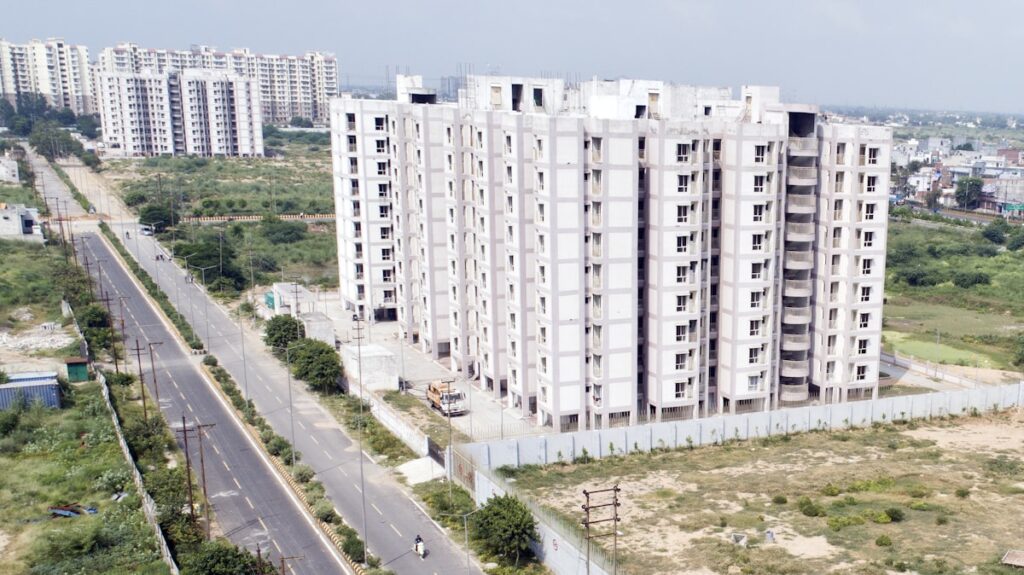
Real estate pre launch marketing that stays on the right side
The useful distinction is between building an audience and inviting a purchase. The first is unrestricted. The second is what the section addresses.
| Generally safe | Clearly inside the prohibition |
|---|---|
| Brand advertising for your company | Advertising a specific unregistered project |
| Publishing completed project work | Publishing floor plans and prices for an unregistered one |
| Building an interest list with no project attached | Taking a booking amount or a token |
| Market and locality content | Offering an early bird price on unregistered inventory |
| Growing an audience you can reach on launch day | Allotting a specific unit number in advance |
The middle column has one honest grey area worth naming: a general interest list that everybody involved privately understands to be a queue for a specific project. If the substance is an invitation to purchase, the label on the form is unlikely to save you.
The approach that actually works
Spend the pre registration period building an audience rather than a sales pipeline. Done properly, this is more valuable than the early bookings you are giving up.
- Advertise the company, not the unregistered project. Completed work, construction standards, delivery record. All of it legitimate, all of it building the trust that shortens the sales cycle later.
- Run locality and market content. Genuinely useful material about the area attracts exactly the people who will buy there, and none of it requires a project to exist.
- Install tracking early and let audiences accumulate. By registration day you hold a warm pool you can reach immediately, which is the single strongest argument for starting before you have anything to sell.
- Build the launch assets while you wait. Landing page, creative, follow-up sequence, sales scripts. Ready to switch on rather than ready to start building.
- Launch properly on day one. Registration number displayed, full campaign live, warm audience contacted the same morning.
The moment registration completes, every advertisement you publish carries the disclosure duty under Section 11(2), which is the territory we cover in detail in the RERA advertising rules Punjab builders keep getting wrong. Build the registration number into your creative templates before launch day rather than after somebody notices.
What this costs you, honestly
Doing this properly means forgoing early cash flow that competitors are collecting. That is a genuine commercial disadvantage and it would be dishonest to pretend otherwise.
What you gain is a launch that cannot be derailed by a complaint, a marketing asset that keeps compounding, and a position you can defend publicly. For a builder whose business depends on local reputation across repeat buyers and referrals, that trade is usually the right one. It also happens to be the only version compatible with the measurement discipline in our 2026 lead generation playbook, because a pipeline you cannot legally act on is not a pipeline.
When a competitor is doing it and winning
This is the objection that actually stops builders, and it deserves a straight answer rather than a lecture. A project down the road is collecting commitments, funding construction with them, and appears to be paying no price at all.
Two things are true at the same time. Enforcement is inconsistent, so many firms do get away with it for years. And the exposure does not expire quietly: complaints tend to surface later, when a delivery date slips and an unhappy buyer starts reading about their rights. The risk is not evenly distributed across the timeline, which is exactly why it feels absent right up until it is not.
There is also a competitive angle worth noticing. In a market where buyers have been burned, being the developer who says we will open bookings the day registration completes is a differentiator rather than a handicap. Sophisticated buyers, and particularly NRI buyers doing their homework from abroad, read that as a signal about how the rest of the project will be run.
Handled that way, real estate pre launch marketing stops being a compliance problem to work around and becomes a positioning decision you can say out loud.
Frequently asked questions
Is real estate pre launch marketing illegal in every case? Advertising, marketing or inviting purchase for an unregistered project falls within the Section 3 prohibition. Building brand awareness with no project attached does not. The distinction is whether you are inviting a purchase.
Can I collect expressions of interest? Collecting contact details from people interested in your company is ordinary marketing. Taking money, allotting units or promising prices moves it somewhere else entirely.
Everyone else is doing it. Why should I not? Because enforcement is selective rather than absent, and the cost of being the example is far higher for a smaller builder than for a large one.
How long before registration should I start? Eight to twelve weeks gives audiences time to accumulate and assets time to be built properly, so that launch day is an execution rather than a scramble.
Related guides
- RERA Advertising Rules: What Punjab Builders Keep Getting Wrong
- RERA Advertising Rules in India 2026: What You Can Legally Advertise
Planning a launch? Tell us your expected registration timeline and we will map what can run legally before it, and what should be ready to switch on the day it completes — free, no obligation.