
Real Estate SEO in India 2026: How Property Websites Actually Rank

Most property websites in India are built to impress a director in a meeting. Big hero image, a rotating banner of renders, a contact form nobody fills in. They are designed to be looked at, not to be found.
Real estate SEO in India has one hard constraint that changes the whole strategy: the biggest search terms in this sector are owned by portals with budgets you cannot match. Any plan that ignores that fact wastes a year finding out.
What follows is where the winnable ground actually is.

The search you will not win, and why that is fine
Type a head term like flats in a major locality into Google. The first page is portals, then more portals, then a listicle. Those pages have hundreds of thousands of backlinks and years of accumulated authority behind them.
A brokerage site with forty pages is not going to displace them, and no agency should sell you the idea that it will. Accepting this early is not defeatism, it is what frees the budget for the searches you can genuinely take.
There is a second reason not to chase them. Head-term traffic is browsing traffic. Someone typing a broad locality query is often months away from a decision. The searches below are closer to the money.
The three lanes that are actually open
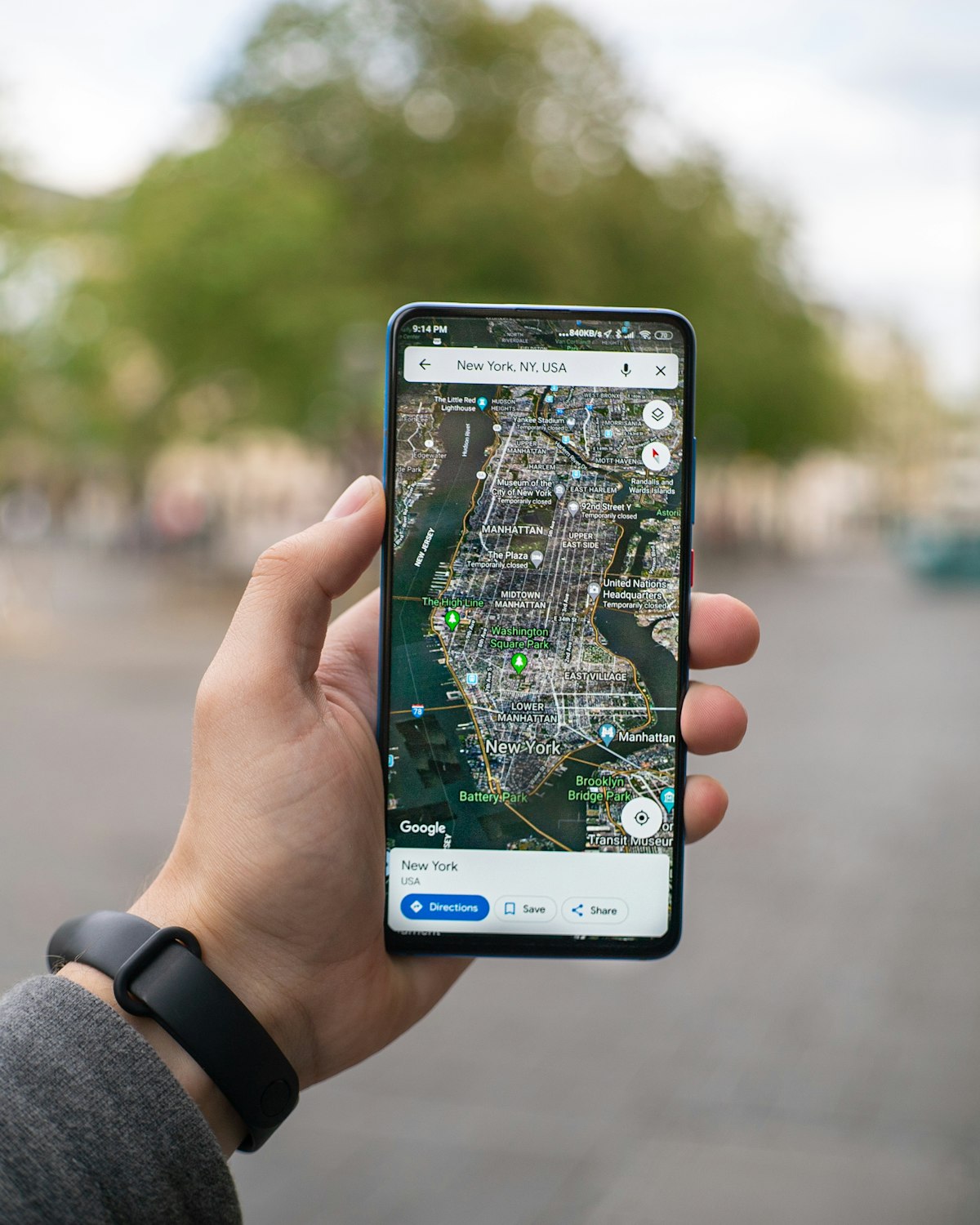
Lane one: the map pack. When someone searches for a property consultant near them, Google shows a map with three businesses. Portals do not compete here. This is the single most under-used channel in Indian real estate.
Lane two: the questions around the transaction. Stamp duty, registration, mutation, land records, loan eligibility, what a particular approval means. Every buyer researches these, portals cover them thinly, and the person asking is demonstrably in a transaction.
Lane three: named projects and micro-localities. Specific project names, specific sectors, specific developer questions. Low volume individually, but the intent is unmistakable and the competition is often a portal page with three lines of boilerplate.
Note what all three have in common. None of them require beating a portal at its own game.
The map pack, according to Google rather than to folklore
There is a great deal of nonsense sold around local ranking, so it is worth going to the source. Google states in its own Business Profile documentation that local results are based mainly on three things:
- Relevance — how well your profile matches the search. Driven by complete, detailed, accurate business information and the right primary category.
- Distance — how far you are from the searcher. This one you cannot optimise, only choose, and it is decided the day you pick an office.
- Prominence — how well known the business is, informed partly by how many websites link to you and how many reviews you have.
Google also states plainly on that page that there is no way to request or pay for a better local ranking. If someone offers to guarantee you a map pack position, that is the end of the conversation.
The distance factor has a consequence Indian firms consistently underestimate. If your office is a long drive from the city you want to sell in, you will not rank in that city’s map pack, whatever you spend. Paid search and organic content can reach there; the map pack cannot. Our guide to local SEO for real estate covers the profile work in detail.
Want to know which lane is open for your business? Send us your website and the cities you sell in, and we will tell you which searches you can realistically take and which ones are already lost — free, and in plain language.
Why transaction questions outperform property listings
This is the least intuitive part of real estate SEO in India, and the most reliable.
A listing page competes with every portal and goes stale the moment the unit sells. A page explaining how a specific state’s registration process works competes with almost nobody, stays useful for years, and is read by people who are mid-transaction rather than mid-daydream.
It also does something a listing cannot. It positions the firm as the party that knows how the process works, which is the actual reason people pick one consultant over another in a market where everyone shows the same inventory.
The practical test for a topic: would a buyer search this while a deal was live? Stamp duty, yes. Ten tips for home decor, no.
The technical minimum, and it really is minimal
Technical SEO is oversold to Indian property firms. For a site of this size, a short list covers almost all of the available benefit.
- Load fast on a mid-range Android phone on mobile data. Not on your laptop on office wifi. Most Indian property traffic is mobile, and heavy render galleries are the usual culprit.
- One page per intent. Three pages half-covering the same locality compete with each other and none of them wins.
- Real titles. Not “Home”, not the company name on every page.
- Internal links that exist. New pages with no links pointing at them are effectively invisible, and this is the most common failure on Indian property sites.
- A consistent name, address and phone number everywhere the business appears online.
That is most of it. If an agency’s proposal is mainly technical audit line items, ask what search it is supposed to win.
What to ignore
- Bought backlink packages. Directory bundles and paid guest posts on irrelevant sites are a risk with no upside.
- Keyword density targets. An artefact of SEO advice from a decade ago.
- Ranking reports as the deliverable. A position is not a result. Enquiries are.
- Chasing national head terms when you operate in two cities.
How long it takes, honestly
Map pack movement can come within weeks, because profile completeness and reviews are fast levers.
Content ranking is slower. New pages on a young domain typically surface on the second or third page first and climb over months as the site accumulates authority. Anyone promising first-page results in thirty days on a new property site is describing something other than organic search.
This is the honest trade-off against advertising, and it is why the two are usually run together rather than as alternatives: ads buy enquiries now, search reduces what those enquiries cost later.
Common questions about real estate SEO in India
Can a broker outrank 99acres or MagicBricks?
On head terms, realistically no. On specific transaction questions, named projects and local map results, routinely yes. Choose the fight you can win.
Do I need a blog?
You need pages that answer what buyers search mid-transaction. Whether that sits under a blog is a navigation decision, not an SEO one.
Is SEO cheaper than ads?
Not at the start. It is cheaper over time, and it keeps working when you pause spending, which advertising does not.
Does my website need to be rebuilt first?
Usually not. A slow, thin site holds you back, but a rebuild is often sold as a prerequisite when the real gap was that nobody ever wrote the pages. Check what content exists before commissioning a redesign, and see our note on why property websites fail to rank.
The short version
Concede the head terms. Take the map pack, the transaction questions and the named-project searches. Keep the technical work small and the internal linking honest.
That is a strategy a two-person firm can execute and a portal cannot easily block, and it is the achievable core of real estate SEO in India. Pair it with a page built to convert and the traffic starts meaning something.
Search behaviour and Google’s documentation change over time. Confirm current guidance in Google’s official help resources before making structural decisions about a site.