
Lal Lakir in Punjab: Property Rights Inside the Village Red Line

A family in a village outside Jagraon has lived in the same house since the 1950s. Three generations were born in it. Nobody has ever questioned that it is theirs. When the youngest son tried to raise a loan against it to expand his workshop, the bank asked what document proved ownership, and there wasn’t one. Possession, yes. Title on record, no.
That is the problem of lal lakir in Punjab, and it affects a very large number of rural and semi-urban households. Punjab has been working to fix it through a statutory record of rights and a scheme to issue property cards to the people who live inside the red line.
Here is what lal lakir means, why it left families without title, what has changed, and what to watch for if you are buying or selling such a property.
What lal lakir in Punjab actually is
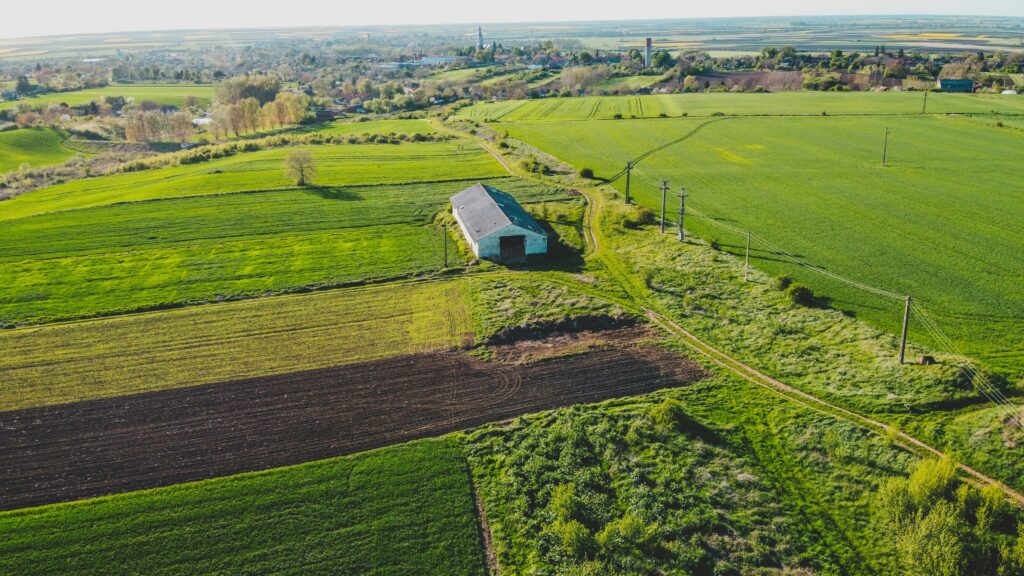
Lal lakir means red line. On old revenue maps, a red line was drawn around the inhabited part of a village, the abadi deh, to separate houses and lanes from the agricultural land surrounding them. Land inside the line was habitation, used for non-agricultural purposes. Land outside it was farmland and was recorded, measured and mapped in detail.
The distinction was administrative rather than hostile. Revenue records existed to track agricultural land, because that is what was taxed and cultivated. The houses inside the village did not need the same treatment for that purpose, so they never got it.
The result, carried forward for generations, is that a field has a khasra number, a recorded owner, a measured area and a mutation history, while the house a hundred metres away has none of those things. In the same village, on the same day, one asset is fully documented and the other is documented barely at all.
Why that became a real problem
For most of the twentieth century it did not matter much. Everyone in the village knew whose house was whose, and possession was undisputed and undisturbed. It began to matter when families needed their property to behave like an asset rather than a home.
- No loan. Banks lend against title. Long possession without a record of rights is not something a lender can take security over.
- Difficult sale. A buyer’s lawyer asks for the chain of title, and there is nothing to produce.
- Weak inheritance position. Dividing a house between heirs is far harder when the starting document does not exist.
- Exposure to disputes. Boundary and ownership arguments between neighbours or relatives come down to memory and testimony.
- No leverage for improvement. The single largest asset most rural families own cannot be used to fund anything.
The workshop loan above is the ordinary face of lal lakir in Punjab. The family is not poor and the house is not disputed. The asset simply cannot be converted into credit because the paperwork was never created.

The Abadi Deh Act and Mera Ghar Mere Naam
Punjab put this on a statutory footing with the Punjab Abadi Deh (Record of Rights) Act, 2021, which provides the legal basis for creating a record of rights for properties inside the abadi. Alongside it, the state launched the Mera Ghar Mere Naam scheme to confer proprietary rights on residents of houses within the lal lakir, in both villages and towns.
The shift the Act makes is the important part. It moves these properties from a position of possession only into a recognised record of rights administered by the revenue department. That is what converts an undisputed home into a documented asset, and for families affected by lal lakir in Punjab it is the entire point of the exercise.
The scheme is administered through the Department of Revenue, Rehabilitation and Disaster Management, and implementation has proceeded district by district rather than everywhere at once. Whether your village or ward has been covered is a local question, and the answer changes over time, so check the current position with the local revenue office rather than assuming from a news report.
How the survey works
The mapping is done by drone survey. Residential properties inside the red line, rural and urban, are flown and digitally mapped, which produces an accurate plan of each structure and its footprint far faster than a ground survey of the same area could.
After mapping comes identification and verification of who occupies each property, and then eligible residents are issued a property card, sometimes described as a sanad, which serves as the title document. The card is issued free of cost.
The verification stage is the one that matters to residents, and it is where disputes surface. If two families disagree about a boundary or about who holds a portion, this is the point at which it is raised and resolved rather than years later. Take it seriously and attend.
What the property card gives you
Once issued, the card is a record of rights over the property. In practical terms that unlocks the things the family could not previously do: sell the property with a documented title, mortgage it or raise a loan against it, and pass it on with a far clearer basis for division among heirs.
It also reduces the scope for the slow-burning boundary disputes that are endemic where nothing is measured. A mapped footprint with a recorded holder is a much better starting point than three neighbours’ recollections.
If you are buying inside the red line
Be more careful here than you would be with an ordinary plot, because the documentation position varies enormously from one property to the next.
- Ask whether a property card has been issued for the specific property, and see it. Do not accept that the village has been surveyed as an answer about this house.
- Check the name on the card against the person selling to you, and against who is actually living there.
- Where no card exists yet, understand that you are buying possession supported by whatever informal documents exist, and price that risk honestly rather than pretending it away.
- Ask about other claimants — siblings, heirs of a deceased occupant, anyone who lived there previously.
- Look at the physical boundaries against whatever plan exists.
Properties covered by the record of rights process are meaningfully safer to buy than those not yet covered. That difference in risk is real and belongs in the price. Anyone selling a lal lakir property with full documentation is entitled to ask more for it than a neighbour selling one without, and a buyer paying the same for both is not getting the same thing.
Frequently asked questions
What does lal lakir mean? The red line drawn on revenue maps around a village’s inhabited area, separating houses and lanes from the agricultural land outside. Property inside it is habitation used for non-agricultural purposes.
Why do lal lakir properties lack title documents? Revenue records were created to track agricultural land, so houses inside the abadi were never recorded in the same detail. Families held possession without a formal record of rights.
What is Mera Ghar Mere Naam? A Punjab scheme to confer proprietary rights on residents living inside the lal lakir in villages and towns, supported by the Punjab Abadi Deh (Record of Rights) Act, 2021, with property cards issued after a drone survey and verification.
Can I get a loan against a lal lakir property? Once a property card has been issued and the record of rights exists, the property can be mortgaged. Without it, lenders generally will not accept possession alone as security.
Does the property card cost anything? The card is issued free of cost to eligible residents under the scheme.
Thank you for reading 🙏
A quick note on who wrote this guide: Leadproio is a digital marketing agency for real estate businesses in Punjab. We’re not a property dealer or legal consultant, so we’re not able to advise on individual properties or paperwork.
What we do for builders, colonisers, dealers and brokers:
- Google ads and Facebook and Instagram ads that bring enquiries straight to your WhatsApp
- Google ranking for your website and projects
- Google Business Profile setup and management
- Websites and landing pages built to get enquiries
If you run a real estate business and would like more enquiries, we’d be glad to hear from you.