
Who Owns Your Ad Account? The Question Builders Never Ask

Imagine you part ways with your marketing agency tomorrow. Not acrimoniously — the contract just ends.
What leaves with them?
Most builders answer “nothing, it is my project.” Then they discover that real estate ad account ownership was never actually theirs, and that eighteen months of accumulated advertising data has walked out with an agency they no longer work with.
This is the least discussed and most expensive detail in the entire agency relationship. It takes five minutes to check. Almost nobody does.
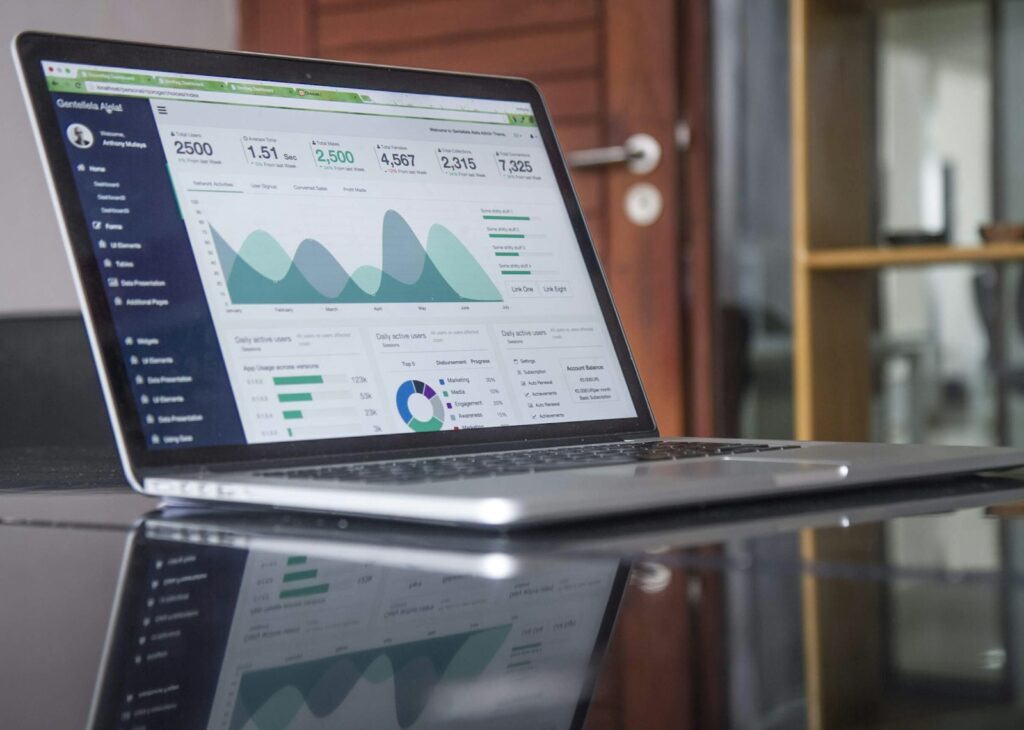
What is actually inside an ad account
An ad account is not just a payment method and some campaigns. It accumulates assets that are genuinely difficult to rebuild.
The pixel and its history. Every site visit, form fill and scroll event your website has recorded since tracking was installed. This history is what lets the algorithm find people who behave like your past enquirers. A fresh pixel with no history is functionally blind for the first several weeks of any new campaign.
Custom audiences. Everyone who watched half your project video. Everyone who opened a lead form and abandoned it. Everyone who visited the pricing page twice. Built from spend you paid for.
Owning these audiences is only half the job — what to actually show each one is covered in our guide to real estate retargeting.
Lookalike audiences. Modelled from the above. Often the single best-performing audience in a mature real estate account, and entirely dependent on the source data.
Campaign history. Which creatives worked, which audiences fatigued, what your CPL did across seasons. The learning is the asset. Which angles to run and how often to refresh them is covered in our guide to real estate ad creative.
Social proof on your ads. Likes, comments and shares accumulate on an ad’s post. Rebuild the ad in a new account and you start at zero engagement, which measurably affects performance.
Conversion event configuration. Domain verification, event prioritisation, the setup work that took weeks to get right.
If the agency’s business portfolio owns the account, all of that is theirs. You do not get a copy. There is no export button for pixel history.
Why agencies hold the account
There are legitimate reasons, and not every agency doing this is acting in bad faith.
Convenience. Setting up a client’s Business Manager, completing domain verification and navigating billing with a client’s finance team is slower than running everything from an in-house account. On a small project, agencies take the shortcut.
Client capability. Some builders genuinely do not want to deal with it, and say so.
Consolidated billing. One card, many clients, simpler reconciliation.
And then the reason nobody says out loud: it is leverage. An agency that owns your pixel history owns a switching cost. Leaving becomes expensive in a way that has nothing to do with the quality of the work. Some agencies rely on that more than they rely on results.
You do not have to decide which reason applies to your agency. You just have to know which situation you are in.
How to check yours, right now
This takes about five minutes.
- Go to business.facebook.com and sign in with your own account — not a login your agency created for you, and not one they share with you.
- Open Business Settings.
- Under Accounts → Ad Accounts, find the account running your project campaigns.
- Look at which business portfolio owns it, and check your own role — Admin, Advertiser or Analyst.
- Under Data Sources, check the owning portfolio for the pixel too. It can differ from the ad account.
What the answers mean:
| What you find | What it means |
|---|---|
| Your portfolio owns it, agency has partner access | Correct setup. You can revoke access and keep everything. |
| Agency portfolio owns it, you have Admin access | Better than nothing. Access is not ownership — they can remove you. |
| Agency portfolio owns it, you have no login | You do not have an ad account. You have a service you rent. |
| You cannot find any of this | The most common answer, and the one worth acting on today. |
Check the pixel separately. An agency can hand over the ad account and keep the dataset, which retains most of the value.

The same question applies elsewhere
Ad accounts get the attention, but the pattern repeats:
- Google Ads account — same ownership question, same conversion history at stake
- Google Analytics property — who is the owner, and does historical data survive a handover
- Google Business Profile — who holds the primary owner role, because this one is genuinely painful to recover
- Domain and hosting — if your agency registered your domain, verify whose name is on it
- Your website — do you have admin credentials, or only an editor login
- The lead data itself — are enquiries flowing into a CRM you control, or a spreadsheet on the agency’s drive
Any one of these held by someone else is a dependency. Together they are a hostage situation you agreed to without noticing.
How to fix it without a fight
If you find you do not own things, this is usually a straightforward conversation rather than a confrontation.
Ask plainly. “I would like the ad account and pixel moved into our own business portfolio, with your team retained as a partner with full access.” A reasonable agency says yes and does it. Nothing about their day-to-day work changes.
Watch the response, not the words. An agency that agrees quickly is confident in its work. It is one of several questions worth asking before you sign. An agency that explains at length why this is technically impossible, or warns that performance will suffer, is telling you something about how it retains clients.
Do it at the start with anyone new. Set up your own business portfolio first, then grant partner access. An extra half hour at onboarding removes the problem permanently.
One caveat, honestly stated. Migrating a live pixel is not always seamless, and a poorly executed transfer can disrupt attribution for a short period. That is a real technical concern and a competent agency will raise it and plan around it. It is not a reason never to transfer. It is a reason to plan the timing. Which platform to prioritise in the first place is a separate question — see our comparison of Google Ads vs Meta Ads for real estate.
Our position
Every builder, dealer and broker we work with on paid campaigns owns their own ad account, their own pixel and their own data. We operate as a partner on accounts that belong to the client. Always.
If we stop working together, you keep the account, the pixel history, the audiences and everything the spend built. We keep nothing.
This is not generosity. It is the only arrangement we think is defensible. An agency should be retained because the work is good, not because leaving is expensive. If the only thing keeping a client is a hostage pixel, the agency has stopped competing on results.
If you are still working out where paid campaigns sit alongside everything else, our 2026 playbook for real estate lead generation in India sets out the order we recommend.
Not sure what you own? Send us a screenshot of your Business Settings page and we will tell you exactly where you stand — free, no pitch, whether or not you ever work with us.
Thank you for reading 🙏
A quick note on who wrote this guide: Leadproio is a digital marketing agency for real estate businesses in Punjab. We’re not a property dealer or legal consultant, so we’re not able to advise on individual properties or paperwork.
What we do for builders, colonisers, dealers and brokers:
- Google ads and Facebook and Instagram ads that bring enquiries straight to your WhatsApp
- Google ranking for your website and projects
- Google Business Profile setup and management
- Websites and landing pages built to get enquiries
If you run a real estate business and would like more enquiries, we’d be glad to hear from you.